

How HVAC Companies Are Adapting to the Smart Building Revolution

Smart buildings and connected infrastructure are blowing up right now in the HVAC industry. Its growth is continuous and rapid. HVAC systems are now the central point to energy efficiency, occupant comfort, and real-time building management.
There’s this shift from traditional HVAC servicing to data-driven, automated solutions. So you’re probably wondering: “How can I integrate BAS with HVAC?” Well, rest assured, we’ll give you some peace of mind and break down how you can go about this to ensure a seamless integration.
What the smart building revolution means for HVAC companies
Smart buildings use connected sensors, AI, and automation to manage their systems like lighting, heating/cooling, and security. So it takes standalone systems and transforms them into a connected ecosystem.
But why is it suddenly becoming such a big thing?
The timing comes down to a convergence of pressures: rising energy costs, growing sustainability mandates, the need for predictive maintenance and remote management, and increasingly high expectations for occupant comfort.
Together, these have turned smart buildings into a necessity.
How HVAC companies are adapting to smart buildings
Generally, we’ve been seeing that many contractors are now starting to offer more than just standard installation and repairs.
They’re including BAS/BMS integration, smart controls setup, remote diagnostics, and energy optimization services.
Because of this growing demand in automation and controls expertise, there’s an equal demand for technicians with the respective BAS knowledge. This is now emphasizing how important it is to understand controls, sensors, and networking. And we’re essentially seeing a shift toward HVAC management that is software-driven.
An added incentive for many businesses has been being able to offer data-driven maintenance services, such as predictive maintenance through connected sensors, real-time monitoring, and using analytics to improve system performance and, by extension, customer retention. It’s opened up a new stream of revenue for HVAC businesses.
The role of BAS integration in modern HVAC systems
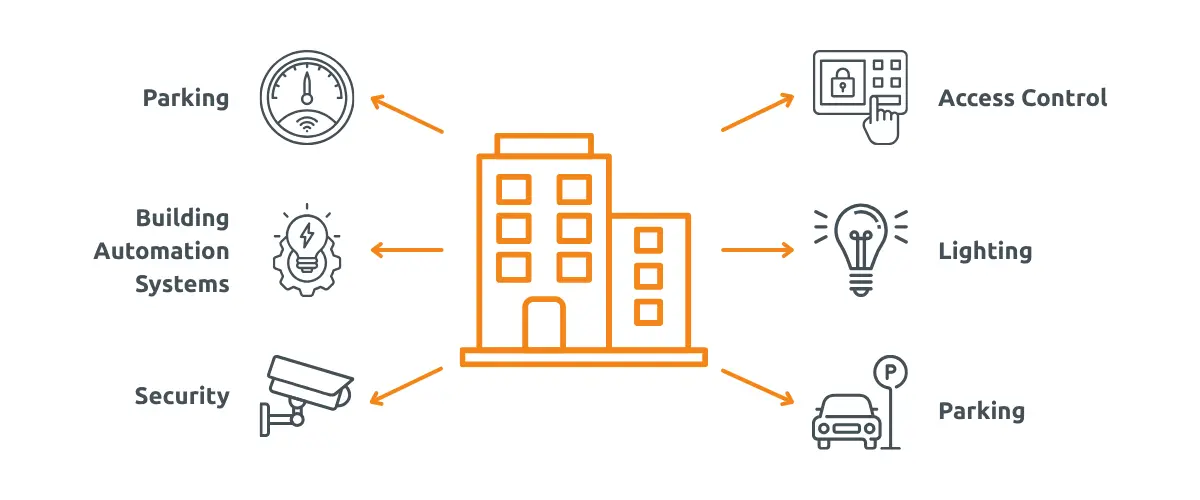
A BAS (or building automation system) is a centralized system that is more or less the technical version of smart buildings, except it’s more like the brain of the entire operation. A common integration method most companies use would probably be Modbus.
The biggest challenges HVAC companies face during the transition
Older buildings still rely on outdated infrastructure, and retrofitting smart controls into aging systems can be costly and complicated. So a lot of companies just throw out the idea of evolving with smart buildings, which is understandable.
Then there’s the skills gap issue.
There’s a difficulty in finding techs that are skilled in both HVAC and automation. However, this presents an opportunity for ongoing training in controls and networking because of such a need.
Why HVAC smart building automation creates new business opportunities

Consider the recurring revenue that you’d get from remote monitoring.
You could implement some subscription-based monitoring and maintenance services. This would also allow you to build long-term client relationships.
You’d concurrently be contributing to helping clients reduce energy consumption. Smart HVAC systems support sustainability goals, and if you position your business as such, it could really give you an edge.
It’s improving efficiency and reducing wastage.
Automation also gives you the chance to position your company as a tech partner. Many HVAC businesses are evolving into smart building consultants, and this stands to be a competitive advantage for those who adopt early on.
Why HVAC companies that embrace smart building tech will lead the industry
The industry is shifting from mechanical service work to connected building management. The HVAC smart building automation is becoming a competitive necessity rather than an optional and “by the way” upgrade.
It’s a step forward into the future of this industry, and before the industry becomes bombarded with technicians and businesses specialising in this field, you might want to get ahead of it. You must become adaptable, integrate expertise, and adopt smart technology to stay in the game.

Articles That May Interest You