

The Quantum Talent Crunch: Why Hiring for Quantum & Photonic IC Engineers Is Becoming a Global Bottleneck

We’re already in the thick of the quantum computing and photonics tech boom. There’s an increase in investments from governments, startups, and major tech businesses all over the world. It’s really a win for the quantum space, but we’ve now hit a brick wall.
There’s an evident gap between innovation demand and the available engineering talent. And that brings us to the infamous quantum talent shortage.
I’ve seen many companies struggle to scale their teams fast enough to keep up the pace with their targets and other competitors in the industry. Maybe you’re currently experiencing it, or you have yet to feel the cold shiver of the talent shortage. Either way, I’ll give you an insider look into why hiring quantum and photonics engineers is so difficult.

What is driving demand for quantum and photonic IC engineers?
Well, for starters, it’s the growth of quantum computing research and its commercialization. But a big contributor is also the expansion of photonic IC ( Integrated Circuit) applications in numerous sectors like telecommunications, data centres, AI infrastructures, defense, aerospace, and medical tech.
And we’ve already started seeing that there’s increased funding, which seems to really be making this space attractive. That has, in turn, spearheaded the demand for specialized quantum hardware engineers, fabrication experts, and quantum physicists.
Why the quantum talent shortage is getting worse
In this job market, we’re seeing the reverse of what you’d see in other markets. There’s a limited number of qualified professionals globally, with an estimated 14,500 workers in the industry since 2024. The jobs are there, but the talent isn’t.
Quantum engineering requires quite a niche set of interdisciplinary expertise. And unfortunately, universities can’t currently produce graduates fast enough. Or we see that many experts would rather remain in academia in comparison to moving into the industry. Maybe it’s the competition that’s a bit too tough to surpass. These are exactly some of the reasons why hiring quantum and photonic engineers is difficult.
The unique hiring challenges in quantum and photonic IC recruitment
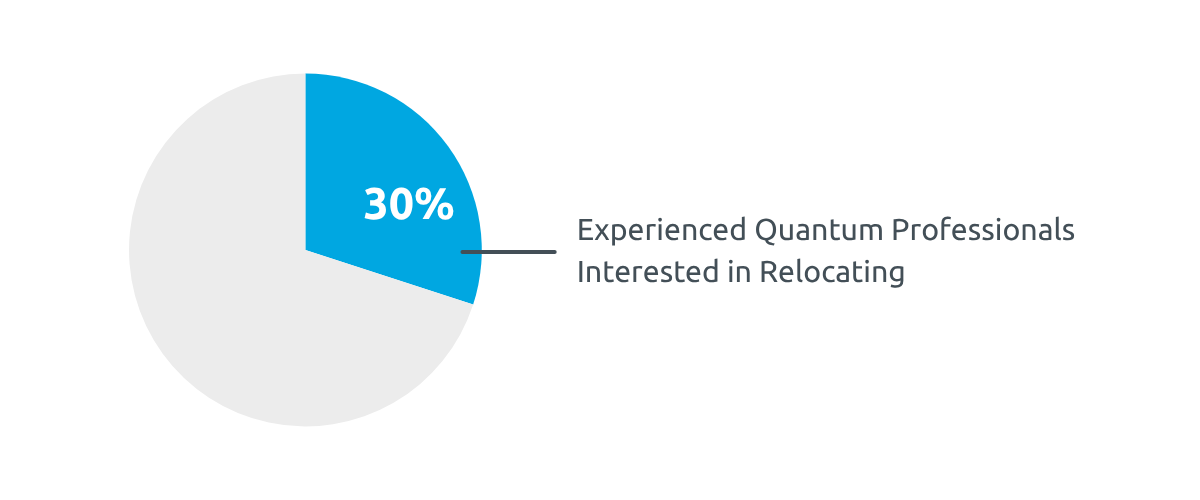
These are very niche talent pools with little active job-seeking activity that we’re dealing with. Some candidates are often recruited globally, so relocation and visa challenges are then brought into the picture, which isn’t appealing for most. As of 2025, only 30% of people with industry experience in Quantum globally had shown an interest in relocating for work, and younger professionals seem to be leading this statistic.
Your hiring cycles are often drawn out for too long because they require technical screening, and even then, there’s still a level of difficulty assessing the more highly specialized technical skills.
And now we’re stuck in a catch-22 situation. You’re looking for experienced specialists, but the industry itself is still emerging and evolving.
How does this impact business and innovation?
Firstly, your product development and commercialization are delayed. Research and development progress is slowed down, and in turn, quantum startups feel the difficulty of scaling. All that work is just put on pause, and the frustration really builds up.
Recruitment costs then go through the roof because you’re trying to hire more engineers, and your existing teams are burnt out, unable to cope.
How can you improve your quantum hiring strategy?
I’d suggest going to the source. Not many people think it’s worth looking into, but you’d never know what community you could open up for yourself. Reach out to universities and research labs. Build relationships with them and invest in internal upskilling or graduate programmes to really show your commitment to investing in good talent.
Offer relocation support and maybe remote flexibility to broaden your options. The key is to create your employer branding that’s focused on innovation and research freedom. Those who move early and simplify hiring processes may stand to gain a competitive advantage. I recommend switching over to a 2-stage interview process that takes place over 2-3 weeks.
2-3-week interview processes are efficient while giving you sufficient time to assess technical skills, and, according to research, 61% of candidates tend to accept the first offer they receive if it is received timeously.
And well, there are always specialist recruitment agencies that understand your particular hiring needs better than anyone else, such as us here at Darwin, for example.
The race for talent is only the beginning
The bad news of it all is that the quantum talent shortage is expected to intensify as the industry continues to evolve and grow. Businesses are competing for the same quantum, and photonic engineers need long-term hiring strategies rather than just resorting to reactive hiring.
Talent availability may just become one of the biggest factors determining success in the quantum tech sector. And instead of having your global position in the field take a hit, you need to get ahead of your hiring needs.

Articles That May Interest You