

HVAC Interview Questions: The Complete Guide to Acing Your HVAC Technician Interview

If you’ve ever walked into an interview and blanked on a simple question, you’re not alone.
No matter how much experience you have, interviews can still be intimidating and unpredictable. This is especially true when trying to land a job in the HVAC industry, because it takes more than just technical skill to get the nod of approval. You also need to prove your knowledge, problem-solving ability, and professionalism during the interview process.
Whether you’re just starting out or have years of field experience, preparing for common HVAC interview questions can make the difference between getting hired and being overlooked due to a lack of preparation. You might know your stuff, but explaining it on the spot is a different story.
In this guide, I’ll break down the most important HVAC interview questions, including general, technical, and behavioural questions, along with tips on how to answer them confidently.
What HVAC employers are really looking for
Here’s the thing. Most employers aren’t expecting perfection from you. They’re trying to figure out how you think on the job.
Employers want to evaluate your technical knowledge, your ability to work safely and efficiently, how you interact with customers and team members, and your reliability and work ethic.
Many companies structure interviews around multiple categories (general, experience-based, and in-depth technical questions) to get a full picture of your capabilities. And you can either fumble your way through or stand out.
The most common HVAC interview questions
These questions are the more generalised ones that help understand who you are and why you’re in the field.
The most common questions we’ve come across are centred around why you chose HVAC as a career path, what you already know about the company, and why you’re choosing to leave your current job.
Salary expectations are always bound to come up in every interview in every industry, but with HVAC, you’d also be asked about your level of comfort when it comes to the physical demands of the job. And of course, interviewers love the “what are your strengths and weaknesses?” (self-awareness questions).
It sounds simple, right? But you’d be surprised how often it catches people off guard.
Employers are looking for motivation, honesty, and long-term potential; not just a regurgitation of textbook answers.
Keep your responses genuine. Remember, employers are interviewing multiple candidates, and they can tell the difference between answers that feel scripted and those with more personality.
This is an obvious one, but keep your answers relevant to HVAC and what was asked. The more you digress, the less time you have to actually talk about what matters. Make sure you emphasise growth and learning.
For example:
“I chose HVAC because I enjoy hands-on work and problem-solving. I like the challenge of diagnosing issues and fixing systems that people rely on every day.”
Learn more about HVAC: HVAC Jobs: Salary, Career Paths, Requirements & How to Get Hired
Talking about your experience without underselling yourself
A lot of techs downplay their experience. The saying “the devil is in the details” applies here.
These questions aim to explore your past work experience, systems you’ve worked on, tools you’re familiar with, and certifications you hold.
Be specific. Instead of saying:
“I’ve worked on HVAC systems.”
Try:
“I’ve worked on split systems, heat pumps, and rooftop units, focusing mainly on maintenance and troubleshooting in commercial environments.”
Technical HVAC interview questions (where most struggle)
This is where interviews can feel more intense. Most of the time, they’re not looking for perfection, just a solid understanding of your trade.
You may be asked about the refrigeration cycle, troubleshooting a system that isn’t cooling, or safety procedures.
Employers are looking for logical troubleshooting, safety awareness, and real-world application of knowledge.
Example answer:
“When diagnosing a system, I start with basic checks like thermostat settings and power supply. Then I inspect components like filters, coils, and fans. If needed, I use gauges and meters to identify deeper issues like refrigerant levels or electrical faults.”
Behavioural and situational questions
These questions test real-world decision-making and are often overlooked.
You may be asked about conflict resolution, handling customers, or past mistakes.
Answer using the STAR method
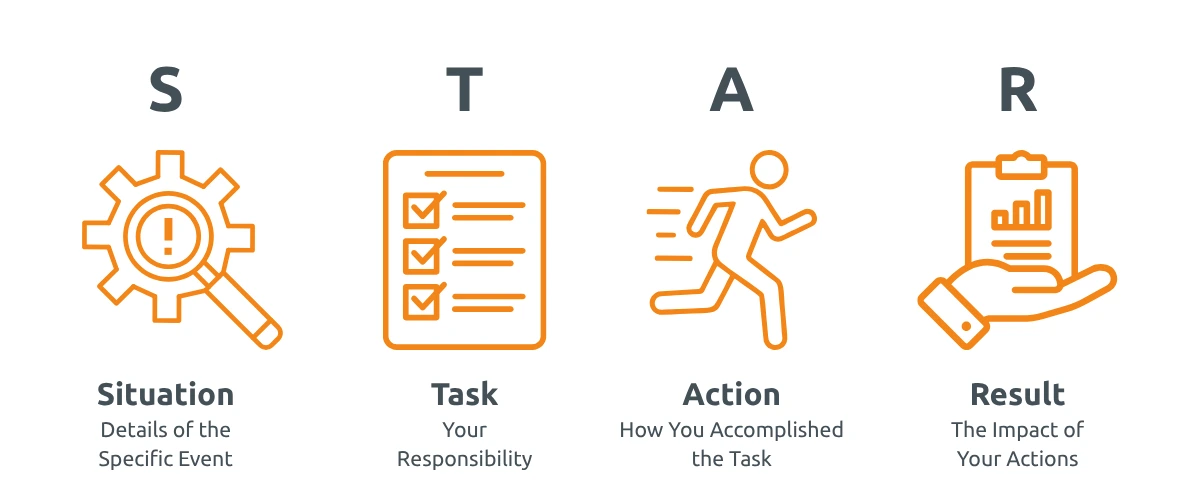
- Situation describes what happened
- Task explains your responsibility
- Action explains what you did
- Result explains the outcome
Example:
“A customer had no cooling during peak summer. I diagnosed a faulty capacitor, replaced it, and tested the system. The system was restored quickly and the customer was satisfied.”
Questions you should ask
Interviews go both ways. Asking questions shows interest and professionalism.
Good questions include asking about daily responsibilities, challenges, training opportunities, and expectations for the first 90 days.
How to prepare without overthinking it
Focus on fundamentals like refrigeration cycles, electrical basics, and troubleshooting.
Practice speaking your answers naturally rather than memorising scripts.
Use real examples from experience whenever possible.
Research the company before the interview and prepare questions.
Show willingness to learn and adapt.
Common mistakes to avoid
Avoid vague answers, overconfidence, negativity about past employers, and ignoring safety topics.
Always ask at least one question at the end.
How to answer HVAC interview questions with confidence
Structure your answers clearly and explain your thought process step by step.
Pause before answering if needed.
If you don’t know something:
“I haven’t encountered that exact issue before, but I would start by checking the most common causes and follow a logical diagnostic process.”
Follow-up tips after your HVAC interview
Send a short thank-you message after the interview.
Example:
“Thank you for the opportunity to discuss the HVAC technician role. I enjoyed learning more about your team and systems. I’m excited about the possibility of contributing.”
How to stand out in an HVAC interview
Focus on communication, confidence, and problem-solving rather than perfection.
Practice, stay honest, and think like a technician.

Articles That May Interest You