

The EU’s Energy Transition Targets: What Dutch Engineering Firms Need to Deliver by 2030

The pressure is on as the EU’s climate deadline draws nearer and nearer. There’s the EU’s Fit for 55 package, renewable energy targets, and to top it all off, the Netherlands has its own 2030 climate commitments. And engineering firms are no longer thought of as “support functions”; they have become the central point of delivery commitments.
Dutch engineering firms are expected to deliver offshore wind, grid infrastructure, sustainable construction, and industrial decarbonisation, just to name a few. It’s a lot for sure, but this also presents plenty of opportunities to lead the renewable industry into this new age.
Curious as to how you can? I’ll explain it all in this article and help you understand how your firm could break into this Dutch energy transition.
Understanding the Dutch energy transition targets for 2030
The EU’s Fit for 55 agenda
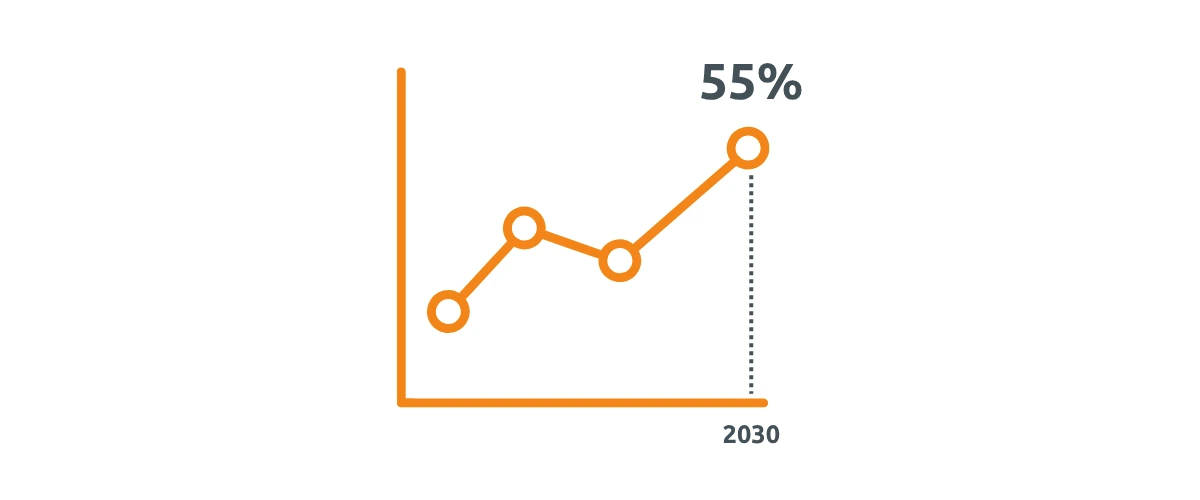
The EU has this overall target of reducing greenhouse gas emissions by at least 55% by the year 2030. They’re aiming to lead the global climate change revolution. In terms of the renewable energy sector, there are increased targets for uptake and improving efficiency in energy.
The Netherlands’ national climate goals
As I’ve mentioned, the EU has the overall target of 55% emissions reduction by 2030. But they also want to expand on the renewable electricity industry and the offshore wind sector. Their long-term goal is to reach net-zero by 2050. However, the issue is that we aren’t currently on track with this, and we probably won’t get there without acceleration.
Why 2030 is the critical deadline
Any infrastructure project requires years in advance of planning and then execution on top of that. 2030 seemed attainable when the deadline was initially set, but it’s a different story now. It might be very unlikely that we’ll reach that target by then, because of the engineering capacity shortages that are slowing down delivery.
Renewable energy project demand in the Netherlands is accelerating
If we want to get anywhere close to our targets for 2030, rapid scaling of renewable energy generation and its supporting infrastructure will be required. This will, in turn, create sustained demand across the engineering sector.
Engineering firms are constantly being asked to deliver more, at a faster pace. That means you need to focus on having larger project pipelines, faster project timelines, increasing your regulatory complexity, and incorporating multi-disciplinary project coordination.
The renewable energy demand is not that simple. It extends beyond generation projects. Any growth in this sector will affect grid infrastructure, how energy is stored, electrification as a whole, energy systems that are industrial, and sustainable building upgrades.
Delivery capacity has become a major industry challenge
Keep in mind that a lot of projects are probably competing for the same resources. We’re all competing for the same skilled techs, project managers, technical consultants and construction capacity.
Not only that, but this industry is facing tight timelines and expectations that continue to rise. There’s constant pressure from the industry to deliver projects faster. The industry is also bearing down on environmental requirements and compliance. And client expectations are also adding to the mix around efficiency and sustainability needs.
When delays come into the picture, well, that can throw a wrench in your government-issued funding, your investor’s confidence, energy security goals, and corporate sustainability commitments.
Dutch engineering firms must scale their teams quickly

Engineering shortages are becoming one of the biggest barriers to project execution, and it’s slowing down the delivery of renewable energy.
When it comes to the demand, it’s not just increasing in one discipline. It’s all of them. From electrical engineers all the way to energy consultants and everything in between. The Dutch market is being stretched so thin that they’re having talent shortages across the entire engineering sector.
This is where international recruitment comes into play. Dutch firms are increasingly looking for international engineering talent. They had to expand their recruiting tactics because of this insane pressure within the energy industry.
We’ve seen some impressive talent among South African engineers due to their technical expertise and international mobility, and that’s why we’re also expanding our searches to their shores. In addition, one of South Africa’s native languages, Afrikaans, is quite similar to Dutch, and so this decreases the language barrier significantly.
Engineering firms need to shift from reactive hiring to long-term planning
Project-to-project hiring is a no-go in this sector. If the sole focus is on short-term hiring, you are opening yourself up to a bunch of delivery risks. I’ve tried to emphasise to various companies that they need to establish stronger talent pipelines.
Try to implement international hiring strategies, retention initiatives (like bonuses based on project success), branch out to specialist recruitment agencies (such as Darwin Recruitment), and don’t overlook your existing team. Help them upskill and provide them with opportunities to grow.
Having a planned-out workforce is becoming quite a competitive advantage to have, so position your scalability as essential for winning and delivering renewable energy projects through the year 2030.
Collaboration will be essential to meeting 2030 targets

There is no single organisation that can deliver the transition alone. That’s why there is a growing need for collaboration between engineering firms, government, infrastructure providers, and technology companies.
How fast your decision-making and coordination are will matter a lot. Your delivery speed will depend on streamlined approvals, better coordination between projects, getting involved in your projects early on, and having integrated supply chains.
As much as the renewable energy transition is creating pressure, it’s also creating opportunity.
From renewable energy targets to real-world delivery
The Dutch energy transition targets are now operational delivery challenges rather than long-term ambitions. The renewable energy project demand in the Netherlands will continue to accelerate toward 2030.
Engineering firms are facing some key pressures from delivery speed and capacity constraints, all the way to talent shortages and increasing project complexity. This won’t change anytime soon unless firms get with the program and realise just how integral this transition is.
The firms that are able to scale their talent, improve their delivery capabilities, and adapt quickly will play a very defining role in the Netherlands’ renewable energy future.

Articles That May Interest You